
Ayurvedic Medicine for Constipation: Remedies, Herbs, and What to Know
Ayurvedic Medicine for Constipation: Remedies, Herbs, and What to Know
Discover articles about Indian food, culture, and traditions
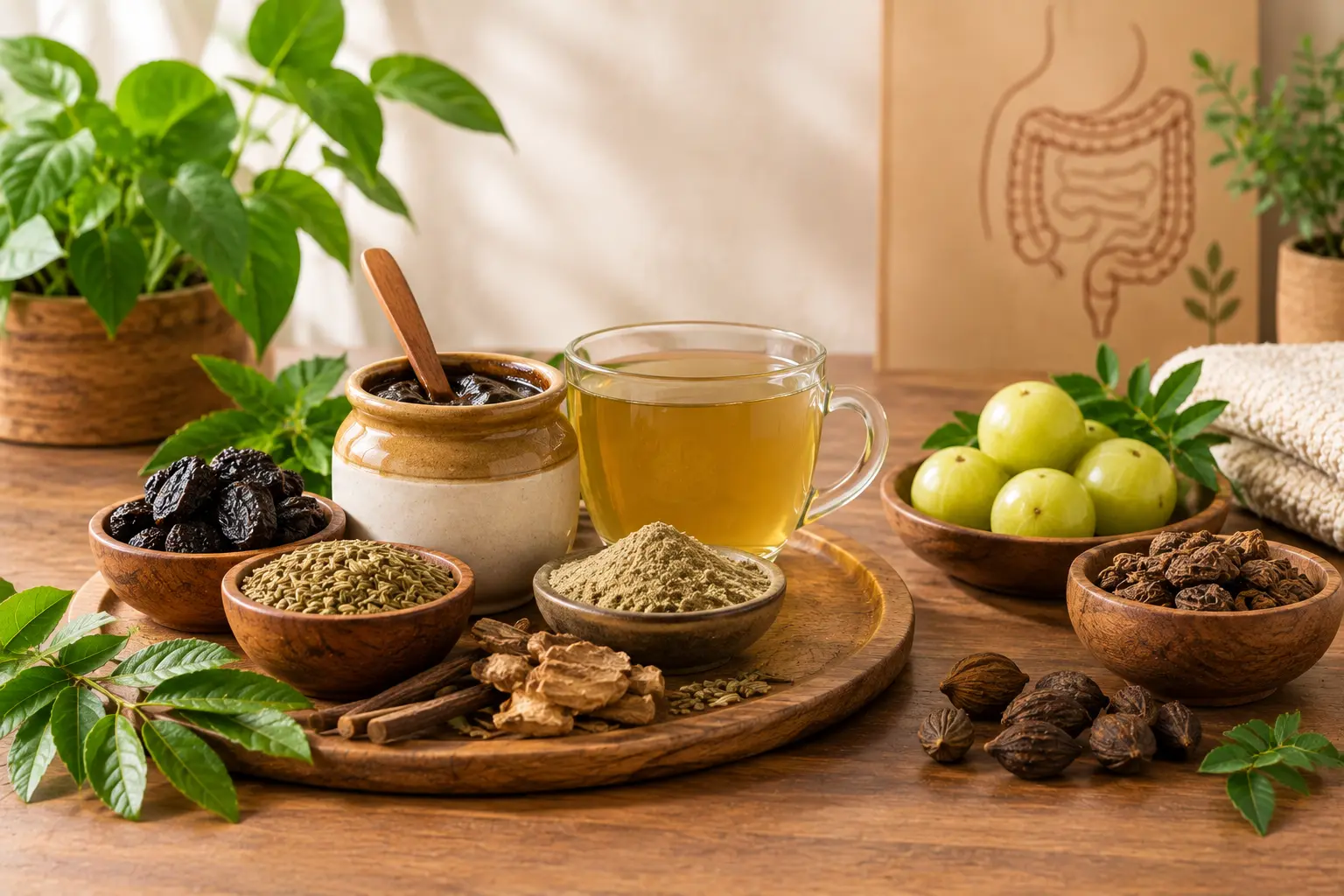
Constipation can be uncomfortable, frustrating, and surprisingly disruptive to your day. And for many of us, the first thing we remember reaching for as kids wasn’t a medicine at all. It was some little ingredient, drink, or home remedy our grandparents would quietly bring out whenever our stomach wasn't quite right.
If you're looking for an Ayurvedic medicine for constipation, you'll find several traditional herbs and formulations commonly used to support bowel regularity, including Triphala, Isabgol (psyllium husk), and Haritaki. But they don't all work the same, and a remedy that works for one person may not work for another.
Here’s what to know about Ayurvedic remedies for constipation, how they differ, what may help with occasional constipation, and when it’s better to speak with a healthcare professional. We’ve also included a few Ayurvedic options from The Desi Food toward the end to help you explore some of the traditional products available.
Constipation usually means having fewer bowel movements than usual or having stools that are hard, dry, or difficult to pass. You may also feel like you haven't completely emptied your bowels.
For some people, constipation happens occasionally because of a change in diet, travel, stress, or routine. For others, it can keep coming back and may be related to medications, low fiber intake, dehydration, lack of physical activity, or an underlying health condition.
Before reaching for an Ayurvedic remedy for constipation, it helps to look at what might be causing the problem in the first place.
Common causes of constipation include:
Not getting enough dietary fiber
Not drinking enough fluids
Being physically inactive
Ignoring the urge to have a bowel movement
Changes in your usual routine or diet
Travel or prolonged sitting
Certain medications and supplements
Stress and changes in sleep or daily habits
Some digestive or medical conditions
From an Ayurvedic perspective, constipation is traditionally associated with an imbalance involving Apana Vata, which is linked with downward-moving bodily functions, including elimination.
These are two different ways of understanding constipation. Ayurvedic explanations can help explain why particular herbs and practices are traditionally used, but they shouldn't replace medical evaluation when constipation is persistent, severe, or accompanied by other symptoms.
There isn't one Ayurvedic cure that works for everyone. Different herbs and preparations are traditionally used for different purposes.
Here are some of the most commonly discussed options.
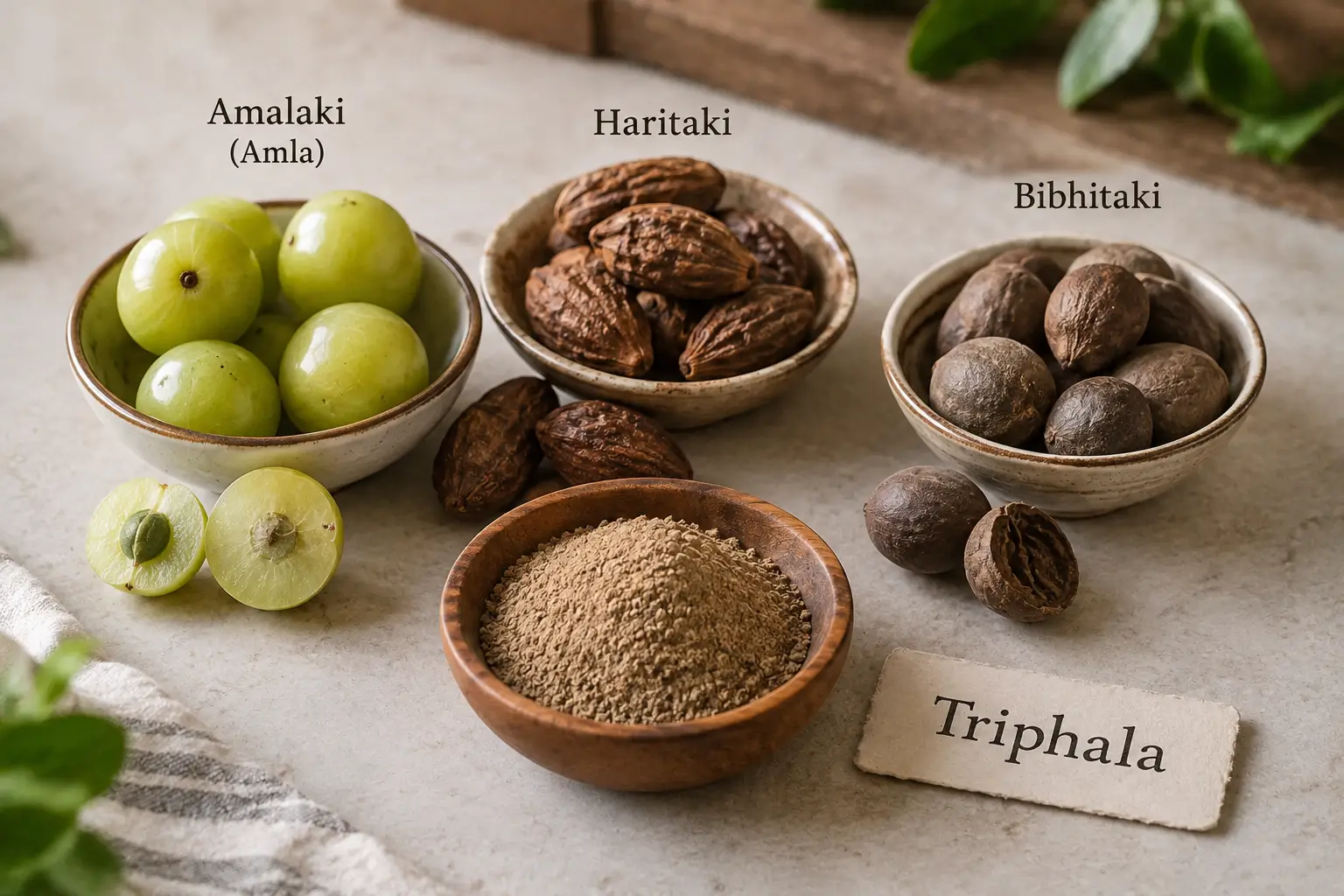
Triphala is one of the best-known Ayurvedic herbal combinations for digestive and bowel support.
It is traditionally made from three fruits:
Amalaki (Amla)
Haritaki
Bibhitaki
Triphala is traditionally used to support digestion and regular bowel movements. It is available as a powder, tablets, capsules, juice, and other formulations.
If you're specifically looking for an Ayurvedic herb for constipation, Triphala is one of the most commonly encountered options.
However, more research is needed to confirm its effectiveness for constipation, and it may not be suitable for everyone. Taking too much may also cause loose stools or digestive discomfort.
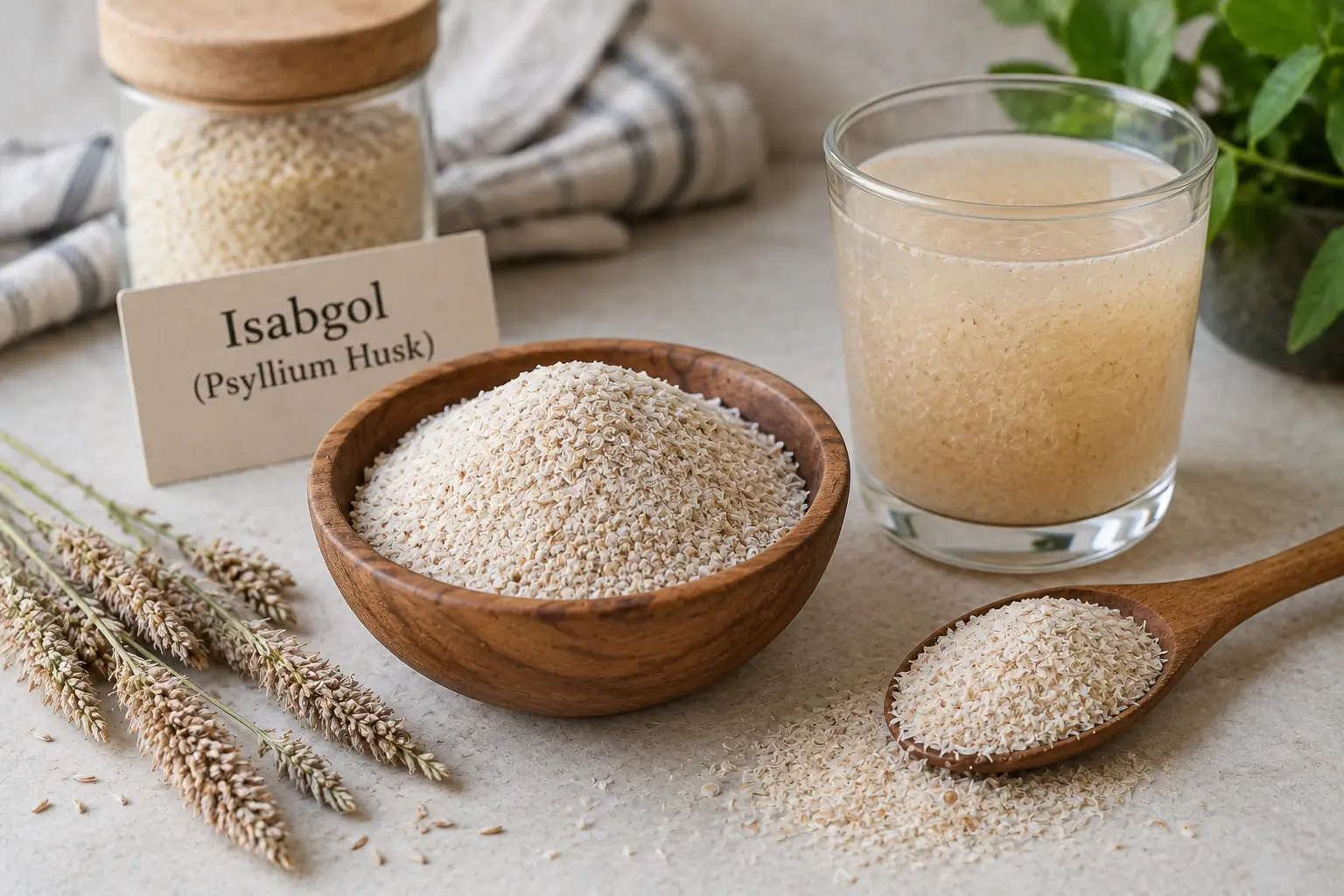
Isabgol, also called psyllium husk, is a source of soluble fiber and is widely used to support bowel regularity.
Rather than working like a stimulant laxative, psyllium absorbs water and adds bulk to stool, which can make it easier to pass.
This makes Isabgol particularly relevant if your constipation is associated with a low-fiber diet.
If you increase fiber, make sure you're also drinking enough fluids. Adding a large amount of fiber without adequate fluid intake can make constipation worse.
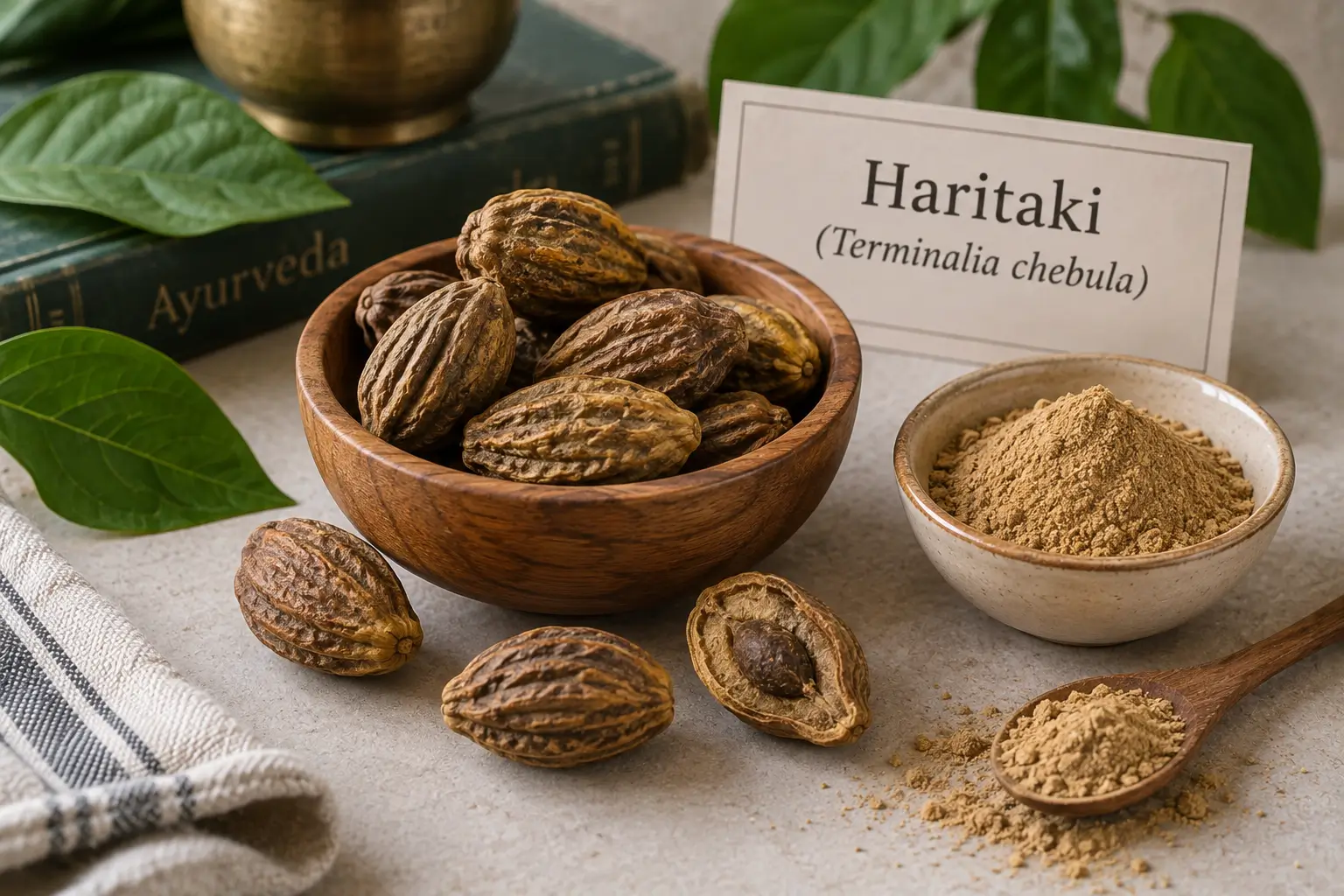
Haritaki is another traditional Ayurvedic ingredient commonly associated with digestive and bowel support.
It is one of the three fruits used to make Triphala, but it is also available on its own in powders and other formulations.
Its traditional use in Ayurveda includes supporting digestion and elimination. As with other herbal remedies, however, the fact that an ingredient has a long history of traditional use does not automatically mean it will work for every person.
You'll also find Ayurvedic constipation powders and formulations containing combinations of herbs and other ingredients.
For example, products may contain ingredients traditionally used to support digestion, bowel movements, or regularity.
These formulations can differ considerably in their ingredients and strength, so it's worth checking the label rather than assuming that every Ayurvedic constipation powder works in the same way.
If you're taking medication, are pregnant or breastfeeding, or have an ongoing medical condition, it's a good idea to check with a healthcare professional before using an herbal formulation.
Triphala and Isabgol are often mentioned together, but they're quite different.
Triphala | Isabgol | |
What it is | Traditional three-fruit Ayurvedic formulation. | Psyllium fiber |
Main use | Traditionally used for digestive and bowel support. | Adds fiber and bulk to stool. |
How it works | The mechanism is not fully established, but traditional use is broader. | Absorbs water and increases stool bulk. |
Best suited to | People interested in traditional Ayurvedic digestive support. | People looking to increase dietary fiber. |
Important consideration | Can cause digestive upset in some people. | Needs adequate fluid intake. |
There isn't a universal winner. The better option depends on why you're constipated and what you're trying to address.
If you're searching for immediate constipation home remedies, it's important to set expectations. There isn't a guaranteed instant cure.
For occasional constipation, some simple measures may help get things moving:
Drink enough water throughout the day.
Increase fiber gradually through fruits, vegetables, whole grains, legumes, or psyllium.
Stay physically active.
Don't ignore the urge to have a bowel movement.
Give yourself enough time and privacy when using the bathroom.
Keep your daily meals and bathroom routine reasonably consistent.
For some people, a fiber supplement such as psyllium can help with regularity, but it needs to be taken with sufficient fluid and may not provide immediate relief.
If constipation is severe, keeps returning, or isn't improving, it's better to find the underlying cause rather than continually trying different home remedies.
When comparing Ayurvedic medicines for constipation, avoid choosing based solely on claims like "natural," "powerful," or "fast acting."
Instead, look at:
The ingredients: Check exactly what the formulation contains and whether it is primarily a fiber-based product, herbal combination, or stimulant-type preparation.
The reason you're constipated: Low fiber intake, dehydration, medications, lifestyle changes, and medical conditions may require very different approaches.
How often you're constipated: An occasional episode is different from constipation that has been happening for weeks or keeps returning.
The directions: Follow the product's recommended serving and preparation instructions rather than assuming that taking more will work better.
Your other medications and health conditions: Herbal products can interact with medications or may not be appropriate in certain situations.
"Natural" doesn't automatically mean safe.
The safety of an Ayurvedic product depends on its ingredients, preparation, dosage, quality, and how it is used. Some Ayurvedic preparations may contain minerals or metals, and concerns have been raised about heavy-metal contamination in certain products.
If you're buying an Ayurvedic product in the US, look for a clearly labeled product from a reputable manufacturer and check the ingredient list carefully.
It's also important to remember that dietary supplements and Ayurvedic products aren't evaluated in the same way as FDA-approved medicines for treating constipation.
If you're taking prescription medication or have a health condition, talk with your healthcare provider before adding a new herbal product to your routine.
If you're looking for traditional Ayurvedic options for digestive and bowel support, The Desi Food carries several products that contain commonly used ingredients.
Himalaya Wellness Pure Herbs Triphala Bowel Wellness is a Triphala-based option for people specifically looking for an Ayurvedic herbal product focused on bowel regularity.
If you're more interested in increasing fiber intake, Dabur Sat Isabgol provides psyllium husk. Psyllium absorbs water and adds bulk to stool, making it a different type of option from Triphala.
This is another traditional Ayurvedic formulation available for those looking for a multi-ingredient herbal option. If you're considering an Ayurvedic constipation powder, check the full ingredient list and product directions before using it.
Kerala Ayurveda Abhayarishtam is a traditional Ayurvedic liquid formulation containing Abhaya, the Ayurvedic name for Haritaki, along with other ingredients. It is one of the classical-style formulations available for those interested in traditional Ayurvedic preparations.
Baidyanath Jhansi Abhayamrita is another traditional Ayurvedic formulation featuring ingredients used in Ayurvedic digestive and bowel-support preparations. As with any multi-ingredient product, check the label for the complete formulation and directions.
When choosing between them, focus on the formulation and ingredients rather than simply looking for the "strongest" constipation medicine.
Occasional constipation is usually not a reason for concern. But some symptoms shouldn't be treated with home remedies alone.
Seek medical advice if constipation is persistent or accompanied by:
Blood in the stool or rectal bleeding
Constant or severe abdominal pain
Vomiting
Fever
Inability to pass gas
Unexplained weight loss
Black or tarry stools
A significant or unexplained change in your normal bowel habits
If constipation continues for several weeks or is interfering with your everyday life, speak with a healthcare professional rather than continuing to try different remedies on your own.
A few everyday habits can make a noticeable difference to bowel regularity:
Eat enough fiber: Include foods such as fruits, vegetables, beans, lentils, whole grains, nuts, and seeds in your diet. Increase fiber gradually if your current intake is low.
Drink enough fluids: Fluids help keep stool softer, particularly when you're increasing your fiber intake.
Stay active: Regular physical activity can support normal bowel function.
Don't ignore the urge: Repeatedly delaying a bowel movement can make it harder to maintain a regular routine.
Keep a consistent routine: Eating meals and giving yourself time to use the bathroom around the same times each day can help establish a regular bowel pattern.
If you're dealing with occasional constipation, traditional Ayurvedic options such as Triphala and Isabgol may be worth considering, depending on what you're looking for.
The important thing is not to assume that every Ayurvedic medicine for constipation is automatically safe, effective, or suitable for long-term use. Start with the basics—fiber, fluids, movement, and a regular bathroom routine—and choose an herbal product based on its actual ingredients and intended use.
And if constipation is persistent, severe, or accompanied by symptoms such as pain, bleeding, vomiting, or unexplained weight loss, don't keep treating it at home. That's a situation where finding the underlying cause matters more than finding another remedy.