
Foods That Boost the Immune System: What to Eat for Better Immunity
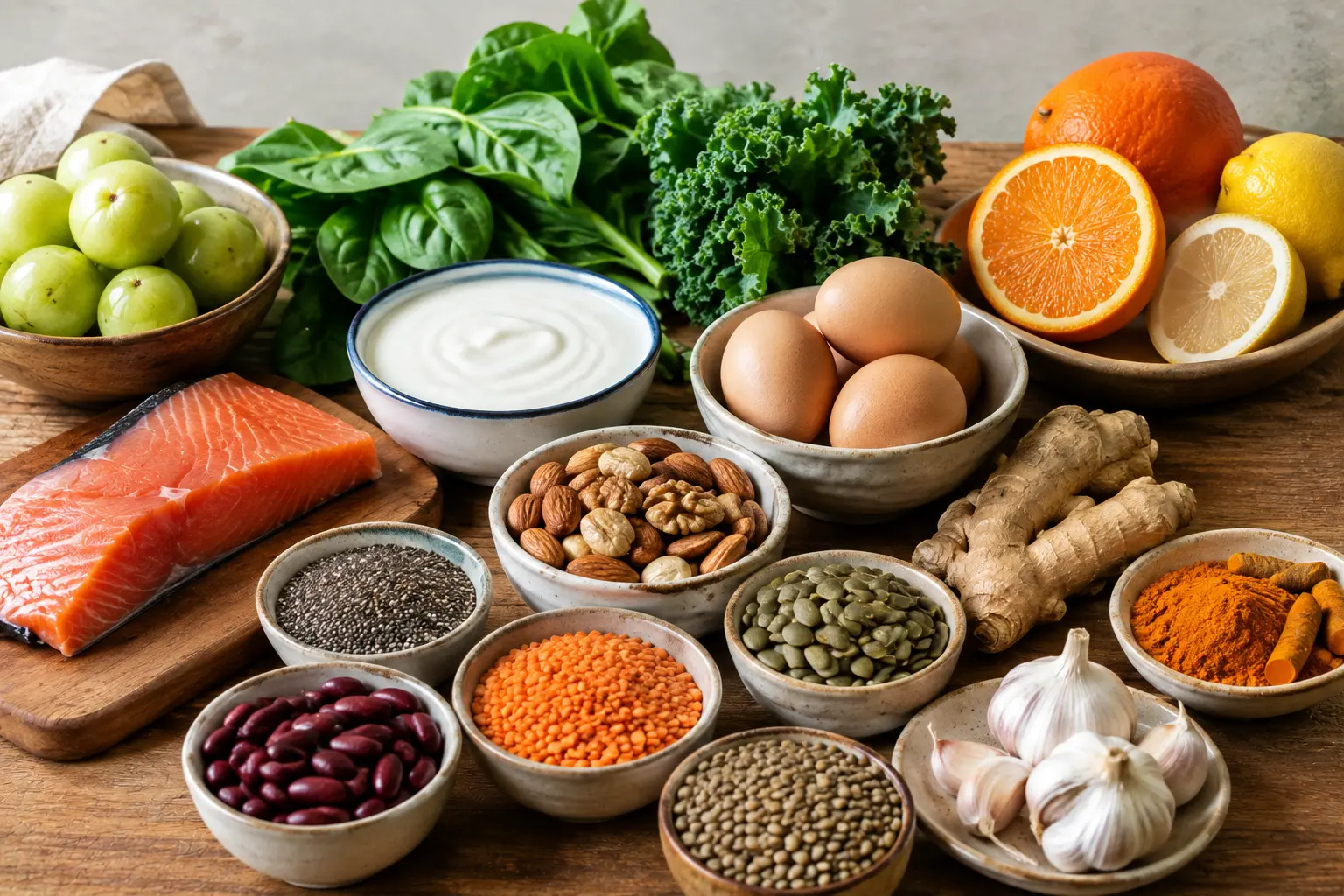
Foods That Boost the Immune System: What to Eat for Better Immunity
Growing up in an Indian household, you probably remember that food was often the first thing you turned to when you were feeling unwell. A spoonful of amla, haldi doodh before bed, ginger in your tea, or a warm bowl of dal was the kind of everyday care that came without much explanation.
Today, we know that no single food can give your immune system an overnight boost. What you eat regularly does matter, though. A varied diet can provide the vitamins, minerals, protein, and other nutrients your immune system needs to function normally.
So, what foods help with the immune system? Here are some of the most useful foods to include in your regular diet, along with the nutrients that make them worth eating and simple ways to enjoy them.
Can Food Really Boost Your Immune System?
Not in the way the phrase "immune boosting" often suggests.
Your immune system is a complex network that relies on many different cells, tissues, organs, and nutrients. Foods don't switch your immunity on or make you immune to a cold or flu. Instead, eating a nutritious variety of foods helps provide the nutrients your body needs for normal immune function.
That distinction matters. If you're deficient in a particular nutrient, correcting that deficiency can help normal immune function. But taking extra vitamins or eating one particular "superfood" when you already get enough nutrients isn't a shortcut to better immunity.
The goal, then, isn't to find one magical food. It's to build meals around a balanced mix of fruits, vegetables, whole grains, pulses, dairy or other protein sources, nuts, and seeds.
10 Foods That Support a Healthy Immune System
1. Amla
Amla, or Indian gooseberry, is one of the easiest Indian foods to bring into an immunity-focused diet. It is naturally rich in vitamin C, a nutrient that plays several important roles in normal immune function.
You can eat fresh amla when it's in season, add it to chutneys, or use it in traditional preparations. Fresh sources generally retain more vitamin C than foods that have been stored or exposed to prolonged cooking.
2. Citrus Fruits
Oranges, grapefruit, lemons, sweet limes, and other citrus fruits are familiar sources of vitamin C.
Vitamin C is important for normal immune function, and fruits and vegetables are among the best ways to get it through your diet. Have an orange with breakfast, add lemon to a meal, or use fresh citrus in a fruit bowl.
3. Yogurt and Other Fermented Foods
A bowl of plain yogurt or curd is an easy way to add protein and other nutrients to your diet.
Some fermented foods also contain live microorganisms, although the specific benefits depend on the food and the cultures it contains. Instead of seeing yogurt as an immunity booster on its own, think of it as part of a varied diet.
Try it with rice, add it to a raita, or have plain yogurt with fruit and nuts.
4. Eggs
Eggs are an excellent source of high-quality protein and provide several nutrients, including vitamin B12, selenium, and some vitamin D.
Protein is important for many functions throughout the body, including maintaining and repairing tissues. Selenium and vitamin B12 are also involved in normal immune function.
Boiled eggs, egg bhurji, an omelet with vegetables, or eggs alongside your breakfast can all be simple ways to include them in your diet.
5. Fatty Fish
Salmon, sardines, trout, and other fatty fish provide protein along with nutrients such as vitamin D and selenium. They are also sources of omega-3 fatty acids.
Vitamin D is involved in immune function, while selenium supports several processes in the immune system. Fatty fish can therefore be a useful part of a balanced diet, particularly for people who eat seafood.
Try grilled or baked fish, a simple fish curry, or add sardines to a rice- or grain-based meal.
6. Nuts and Seeds
Almonds, walnuts, pumpkin seeds, sunflower seeds, sesame seeds, and other nuts and seeds provide a mix of protein, healthy fats, vitamins, and minerals.
Some also provide nutrients such as vitamin E, zinc, and selenium, which are involved in normal immune function.
A small handful makes an easy snack, or you can add nuts and seeds to oatmeal, yogurt, poha, salads, or homemade energy bites.
The Happilo Premium International Healthy Nutmix is another convenient option if you want a ready-to-eat combination of nuts and seeds for snacking.
7. Leafy Greens
Spinach, methi, drumstick leaves, amaranth, and other leafy greens bring a range of vitamins, minerals, folate, and plant compounds to your diet.
Dark green vegetables are also sources of provitamin A carotenoids, which your body can convert to vitamin A. Vitamin A is important for healthy immune function.
Add spinach to dal, make a simple palak sabzi, stir greens into soups, or use them in parathas.
8. Beans, Lentils, and Dal
If you're thinking about food for increased immunity, don't overlook something as ordinary as dal.
Lentils, chickpeas, rajma, black-eyed peas, and other pulses provide protein along with nutrients such as zinc, iron, and folate.
A simple dal with rice or roti can therefore contribute much more to a balanced diet than relying on a single "superfood."
9. Garlic, Ginger, and Turmeric
Three ingredients that have probably been sitting in Indian kitchen cupboards for generations deserve a place here.
Garlic contains sulfur-containing compounds that give it its distinctive smell and flavor. Ginger contains compounds such as gingerols, while turmeric contains curcuminoids such as curcumin.
All three are useful culinary ingredients with interesting biological properties, but they should not be treated as cures or guaranteed immune boosters.
Use them where they naturally belong: garlic in dal and sabzi, ginger in chai and curries, and turmeric in dals, vegetables, soups, and other everyday dishes.
10. Green Tea and Herbal Teas
Green tea contains naturally occurring polyphenols called catechins. Herbal teas made with ingredients such as ginger, tulsi, or cinnamon can also be a comforting way to add variety to your day.
Just don't confuse a soothing drink with an immune treatment. The bigger picture still matters much more than one particular tea.
If you enjoy green tea, TGL Co. Immune Warrior Green Tea is an interesting option because its blend includes green tea along with ingredients such as amla, tulsi, ginger, turmeric, cinnamon, fennel, and black pepper.
Which Nutrients Matter Most for Immune Health?
Instead of memorizing a list of "immune-boosting" foods, it can be more useful to understand the nutrients behind them.
Your immune system needs adequate amounts of several vitamins and minerals, including vitamins A, B6, B12, C, D, E and K, folate, iron, selenium, zinc, and others. Protein is also an important part of a balanced diet.
Some useful food examples include:
Nutrient | Foods that provide it |
Vitamin C | Amla, oranges, lemons, guava, peppers, broccoli |
Vitamin A / carotenoids | Leafy greens, carrots, pumpkin, sweet potato |
Vitamin E | Almonds, sunflower seeds, peanuts, and other nuts and seeds |
Zinc | Beans, lentils, nuts, seeds, dairy, eggs, and seafood |
Selenium | Eggs, seafood, meat, dairy, nuts, and seeds |
Protein | Dal, beans, yogurt, eggs, dairy, nuts, seeds, meat, and fish |
Vitamin D | Fatty fish, egg yolks, fortified foods, and sunlight exposure |
You don't need to get every nutrient from every meal. What matters is variety over the day and week.
Indian Foods That Make It Easy to Support Immune Health
The good news is that you don't need a completely different diet to eat for better immune health. Many everyday Indian meals already provide a mix of the nutrients your body needs.
For a vegetarian diet, think about a simple meal of dal, rice, sabzi, curd, and a side of salad or fruit. You have protein, fiber, vitamins, minerals, and a variety of plant foods in one meal.
Other easy vegetarian combinations include:
Vegetable sambar with rice
Chana or rajma with roti
Palak dal with rice
Curd rice with vegetables
Vegetable khichdi with yogurt
Poha with peanuts and vegetables
Fruit with yogurt and nuts
A handful of nuts and seeds with breakfast
If you eat a non-vegetarian diet, you can build the same kind of balanced meals by including foods such as eggs, fish, chicken, or other lean meats, alongside vegetables, whole grains, pulses, fruits, and dairy. These foods can add useful nutrients such as protein, vitamin B12, zinc, selenium, and vitamin D, depending on the food you choose.
That's a much more useful approach than trying to add one "superfood" to an otherwise unbalanced diet.
What About Chyawanprash?
Chyawanprash is one of those foods that immediately brings traditional Indian wellness to mind. It is a thick Ayurvedic preparation commonly made with amla and a blend of herbs, spices, and other ingredients. Formulations vary considerably by brand.
If Chyawanprash is already part of your routine, it's worth understanding what's actually in the jar rather than assuming every product is identical.
Our complete guide to Chyawanprash breaks down its ingredients, traditional uses, different formulations, how to consume it, and common questions around choosing a product.
The Desi Food also carries several Chyawanprash varieties, including options from Dabur, Patanjali, Kottakkal, Organic India, and Kerala Ayurveda. If you're comparing them, check the ingredient list, sweetener, serving size, and any dietary requirements that matter to you.
[Product carousel]
What About Haldi Doodh, Kadha, and Other Traditional Drinks?
For many Indian families, a warm drink made with ginger, turmeric, tulsi, pepper, or other spices is part of the ritual of looking after someone who isn't feeling their best.
There's nothing wrong with keeping those traditions. They can be comforting, hydrating, and an enjoyable way to consume familiar ingredients.
The important part is not to turn them into medical promises.
A kadha isn't guaranteed to prevent an infection, and haldi doodh isn't a substitute for treatment when you are genuinely unwell. Think of these drinks as part of your food and wellness routine, not as medicine.
If you enjoy traditional grain- and herb-based drinks, Isha Life Instant Sanjeevini Multigrain Health Drink Mix is another option available at The Desi Food. It combines grains, legumes, nuts, spices, and jaggery into a convenient drink mix.
What Should You Eat When You're Feeling Run Down?
When you're feeling tired or unwell, you don't need complicated "immunity recipes."
Simple, familiar food is often easier to eat and prepare:
Khichdi with vegetables
Dal and rice
Light soups
Curd or yogurt, if you tolerate dairy
Soft-cooked vegetables
Bananas and other easy-to-eat fruits
Nuts or nut butter
Plenty of fluids
If you have a poor appetite, focus on getting enough fluids and choosing foods you can comfortably eat. If you're experiencing significant or persistent symptoms, however, food alone isn't a substitute for medical care.
Can Any Food Prevent a Cold or Flu?
No single food can guarantee that you won't catch a cold, flu, or another infection.
A healthy diet is one part of supporting your immune system, but other habits matter too. Getting enough sleep, staying physically active, not smoking, practicing good hand hygiene, and keeping up with recommended vaccinations all play a role in staying healthy.
And if you are deficient in a particular vitamin or mineral, addressing that deficiency can be important. But taking more of a nutrient than your body needs does not automatically provide extra immune protection.
What Foods and Habits Can Work Against Your Goals?
Supporting immune health isn't only about adding "healthy" foods. Your overall eating pattern matters.
A diet dominated by highly processed foods can make it harder to get the variety of nutrients your body needs. Likewise, regularly replacing balanced meals with sugary drinks, alcohol, or highly refined snacks isn't the best way to build a nutrient-dense diet.
You don't need to eat perfectly. Start by making the foods you eat most often a little more varied and nutrient-dense.
The Bottom Line: What Foods Help Your Immune System?
Again, there isn't a single food that boosts your immune system overnight. Your immune system needs a steady supply of nutrients, and the most useful approach is to get those nutrients from a varied diet.
That can be surprisingly familiar. Amla and oranges for vitamin C, dal and beans for protein and minerals, leafy greens for vitamins, nuts and seeds for healthy fats and micronutrients, and yogurt for protein and other nutrients.
So rather than chasing the next "superfood," build meals that give your body a little bit of everything it needs. And if you enjoy traditional foods such as Chyawanprash, haldi doodh, kadha, or herbal teas, they can have a place in that routine too, as long as they're treated as foods and traditional preparations rather than cures.