Henna for Hair: Benefits, Uses, Color, and How to Apply It
Henna for Hair: Benefits, Uses, Color, and How to Apply It
thedesifood
Discover articles about Indian food, culture, and traditions
Henna has been used as a natural hair color for generations, particularly across India, the Middle East, and parts of Africa and Asia. In India, it is commonly called mehandi, and you will find it sold as everything from pure henna powder to herbal hair-color blends.
But there is a lot of confusion around what henna actually does for hair.
Does henna make hair thicker? Can it stop hair fall? Does it cover grey hair? Is every product labelled “herbal henna” actually pure henna? And what is the difference between natural and black henna?
The answer depends largely on what is actually in the product.
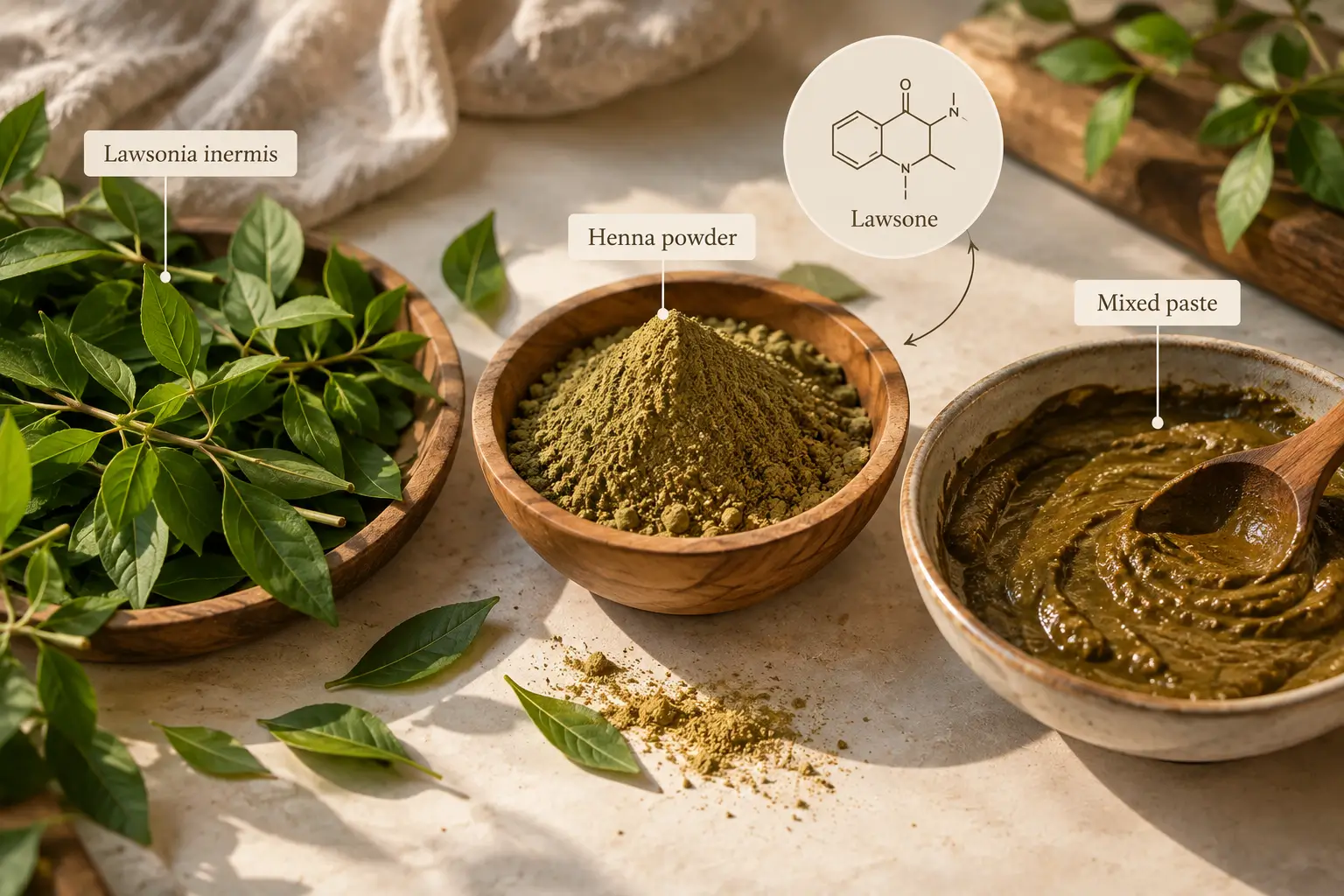
Pure henna comes from the plant Lawsonia inermis. Its main coloring compound, lawsone, binds with hair and produces a characteristic reddish, orange-brown, or brownish tint. The U.S. Food and Drug Administration recognizes henna as a color additive for use on hair, with specific limitations.
We’ll walk you through what henna powder for hair can realistically do, how to use it, what color to expect, how to choose a product, and what to know before applying it. And if you decide it is something you’d like to try, we’ve also picked out a few products you can shop here and compare for yourself.
Henna powder is made by drying and grinding the leaves of the Lawsonia inermis plant.
When the powder is mixed into a paste and applied to hair, the natural pigment in henna interacts with the hair shaft and gives it color. Lawsone is the principal coloring compound responsible for this effect.
In India, the most common name for the henna-based hair coloring product is “mehandi.”
However, these terms do not always mean the product contains only pure henna.
A packet labelled “herbal henna” or “herbal mehandi” may contain other ingredients such as amla, shikakai, bhringraj, neem, or other coloring ingredients. Some products are formulated specifically to produce brown, burgundy, or darker shades.
That is why checking the ingredient list matters more than relying on words such as “natural,” “herbal,” or “Ayurvedic” on the front of the package.
The most established use of henna is hair coloring.
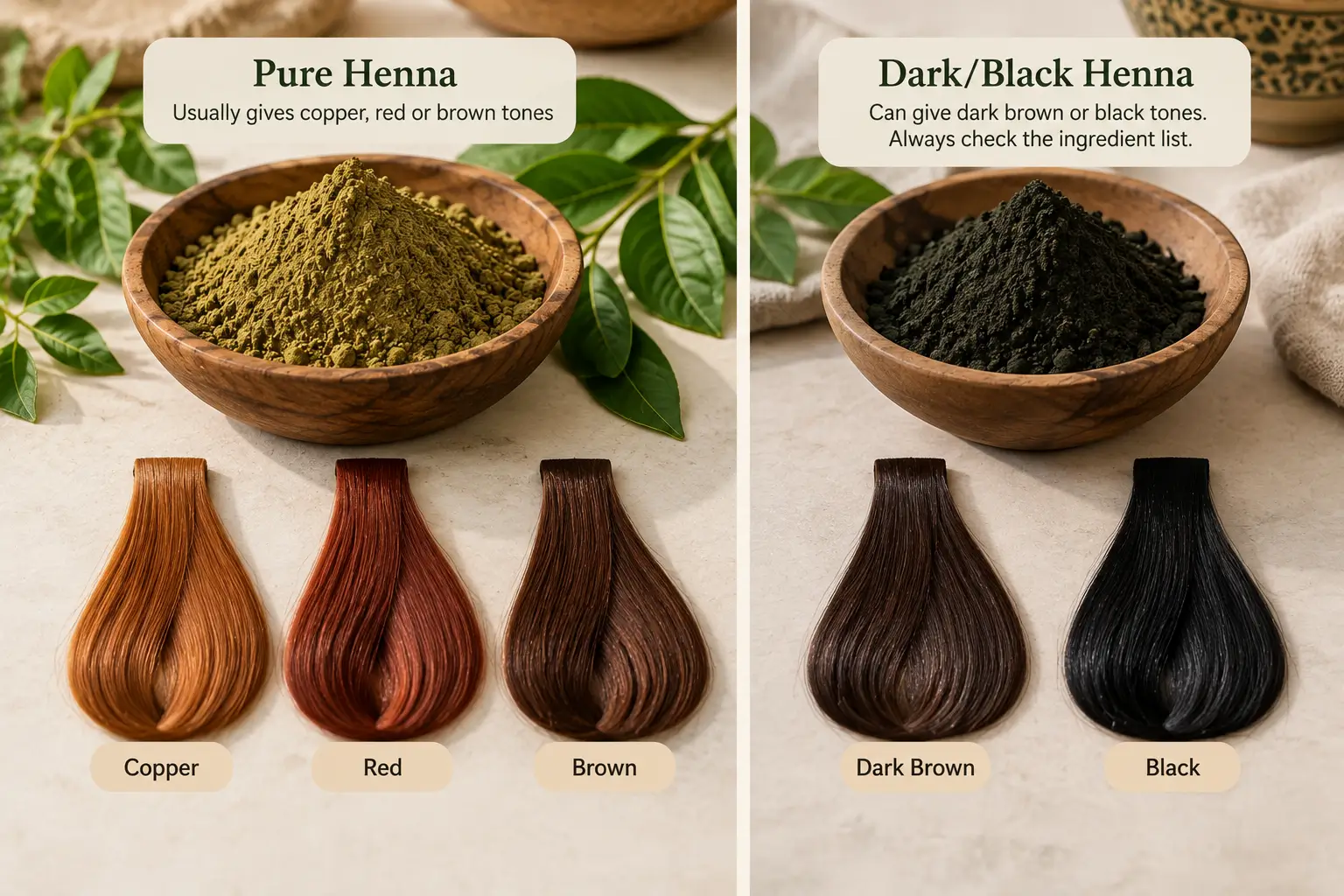
Pure henna typically produces shades in the red, orange-brown, or reddish-brown range. The final result depends on your natural hair color, the amount of grey hair, the condition of the hair, the formulation, and how the product is used.
It can therefore be useful if you want to:
Add a warm reddish or brownish tint
Blend the appearance of grey hair
Refresh the tone of previously colored hair
Use a plant-derived hair-coloring ingredient
Experiment with traditional Indian hair-coloring methods
It is important to distinguish coloring from hair treatment claims.
Henna is widely marketed as a product that strengthens hair, prevents hair fall, promotes growth, or treats dandruff. However, the evidence for these claims is much less established than the evidence for its coloring use.
For example, research into plant-based ingredients and hair growth includes laboratory studies, but that does not establish that applying henna to the scalp will make human hair grow faster or stop hair loss.
So if you are looking specifically for a natural henna hair dye, color should be the primary reason to choose it.
If you use pure henna, don't expect it to turn your hair jet black.
The pure one generally produces a reddish, orange-brown, or reddish-brown tone. Of course it varies person to person.
The result can look very different from person to person.
Starting hair color | Possible result with pure henna |
Light or blonde hair | Bright copper, orange, or red tones |
Light brown hair | Warm copper or auburn tones |
Dark brown hair | Subtle red or warm brown highlights |
Black hair | Usually a subtle reddish tint visible in the light |
Grey or white hair | More noticeable copper, orange, or red tones |
These are general expectations, not guaranteed shades. The final result depends on the individual hair and the specific product.
This is where things get confusing.
If a product produces a color that pure henna normally cannot produce, it may contain other coloring ingredients.
The FDA notes that henna naturally produces a brown, orange-brown, or reddish-brown tint, while products marketed as “black henna” may contain additional ingredients. PPD, or p-phenylenediamine, is one ingredient associated with black henna products and can cause skin reactions in some people.
So don't assume that a product called black henna is simply a darker version of pure henna.
The benefits of henna are often described much more broadly than the evidence allows. It is better to separate what is established from what is traditionally claimed.
This is the primary and best-established use of henna.
Lawsone is the natural pigment associated with henna's coloring ability, and the FDA permits henna as a hair color additive under specified conditions.
Pure henna is plant-derived, which is one reason people choose it over conventional hair-coloring products.
However, plant-derived does not mean every product is ingredient-free or risk-free.
A commercial herbal hair-color powder can contain several other ingredients. Always read the package rather than assuming that “herbal” means “100% henna.”
Many people use henna-based hair packs because their hair feels different after application. Some henna products are also formulated with other plant ingredients intended for conditioning.
That is different from saying that it has been proven to repair damaged hair or permanently strengthen hair from the roots.
For many people, the appeal is not just the color. Using henna mehandi powder is part of a traditional Indian hair-care routine that has been passed down through generations.
If you enjoy that process, a well-labeled henna product can be a practical way to incorporate it into your routine.
This is one of the biggest claims surrounding henna, and it deserves a careful answer.
There is not enough human evidence to say that henna is a proven treatment for hair loss or that it promotes hair growth.
Some research has investigated Lawsonia inermis and related plant compounds for biological activity, but evidence from the laboratory cannot be directly translated into a claim that henna grows human hair.
So if your main concern is sudden or persistent hair loss, thinning, or bald patches, using henna should not replace an evaluation of the underlying cause. It can be used as a hair-coloring product. It should not be presented as a clinically proven hair-growth treatment.
The two are often compared as though one is automatically safer than the other. It is more useful to compare what they actually contain and how they work.
Henna | Conventional hair dye |
Plant-derived coloring ingredient | May contain synthetic or other coloring ingredients |
Pure henna generally gives red, copper, or brownish tones | Can provide a wider range of shades |
Lawsone is the main coloring compound | Different dyes use different coloring chemicals |
Color options depend heavily on the starting hair color | More predictable shade selection in many formulations |
Pure henna cannot simply produce every dark shade | Formulations can be designed for dark or fashion shades |
Product ingredients still need to be checked | Ingredient and safety instructions should also be checked |
The important point is that “natural” is not the same thing as “risk-free.”
The FDA regulates approved color additives for hair, including henna, and recommends following hair-dye safety instructions.
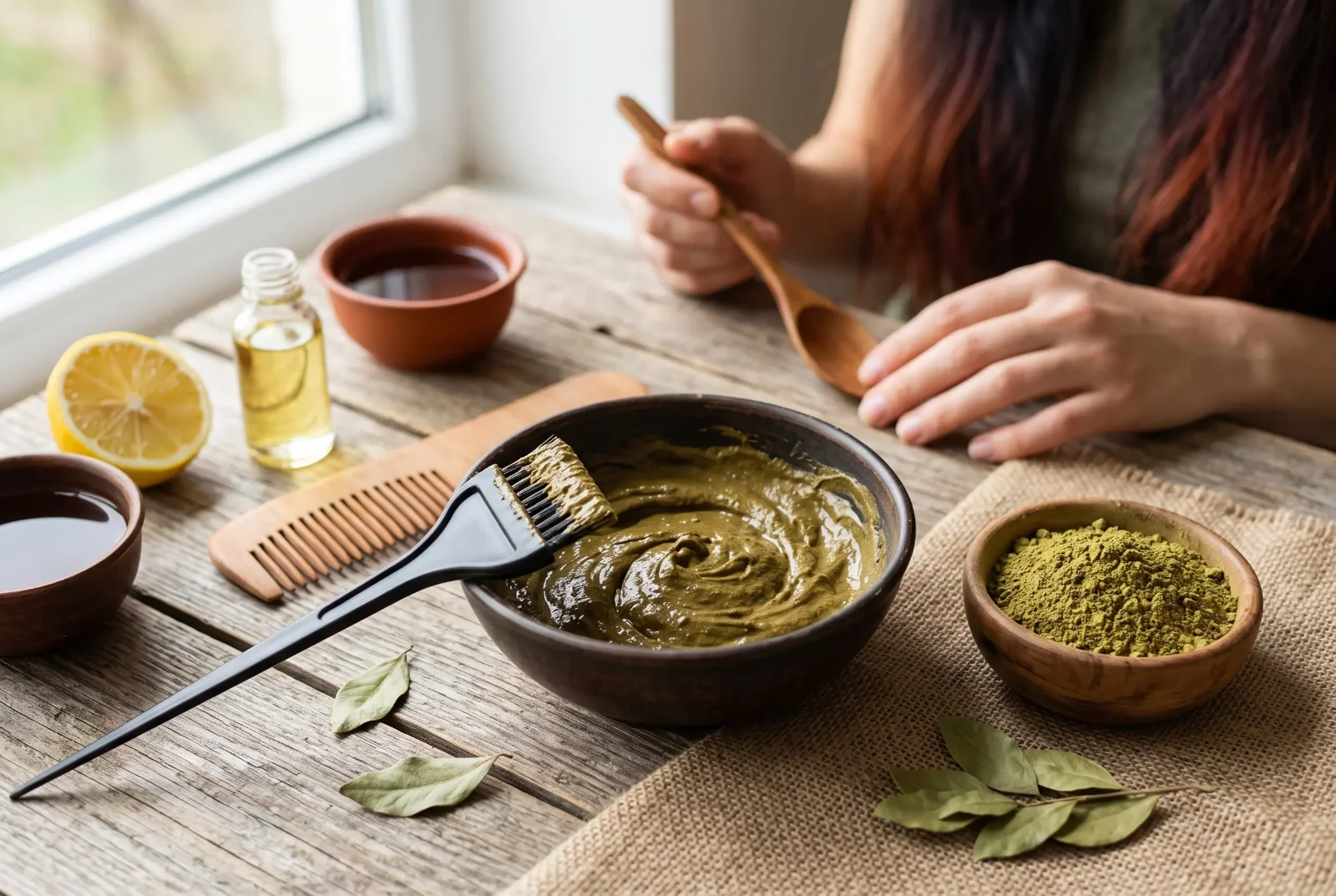
The exact preparation method depends on the product, so the instructions on your package should always take priority.
For a basic application, the process generally looks like this:
Before mixing anything, check whether you are using:
100% henna powder
A henna and herb blend
A ready-to-use hair-color mixture
A product containing additional coloring ingredients
This is especially important if you are trying to use natural henna powder for hair.
Place the required amount of powder in a bowl and add liquid according to the manufacturer's instructions.
For a basic pure henna application, water is commonly used to create a smooth paste.
Avoid making the mixture excessively watery. You want a consistency that can spread through the hair without dripping everywhere.
Follow the product directions regarding whether the hair should be clean, dry, or damp.
Sectioning the hair before application makes it easier to distribute the paste evenly, particularly if you are covering grey areas.
Wear gloves and work in sections.
Start close to the roots and work toward the lengths, making sure the hair is adequately coated.
Protect your clothing, bathroom surfaces, and skin around the hairline because henna stains.
Don't assume that leaving the paste on longer will always produce a better result.
Different products contain different ingredients and have different directions. Follow the instructions printed on the package.
Rinse the hair thoroughly according to the product instructions.
Some people find that henna leaves their hair feeling different immediately after rinsing. The final color can also appear different once the hair dries and the color settles.
There isn't one universal schedule that works for everyone. How often you use henna for your hair depends on:
How quickly your roots become visible
How much grey hair you have
How often you want to refresh your color
Whether you are using pure henna or a multi-ingredient blend
How your hair and scalp respond to the product
Rather than applying it on a fixed schedule, follow the product instructions and pay attention to how your hair and scalp respond.
If you experience itching, burning, redness, swelling, or another unusual reaction, stop using the product.
Every product labelled "henna" is not the same. Before buying any product, check these five things.
If you want pure henna, look for Lawsonia inermis or henna as the primary or sole ingredient, depending on the product.
If you want an herbal blend, check what other herbs or coloring ingredients have been added.
Pure henna is not a universal black or brown dye. If you want copper or reddish tones, pure henna may be suitable.
If you want brown, burgundy, or another shade, look for a product specifically formulated for that color.
Words such as “natural,” “herbal,” “Ayurvedic,” and “organic” do not tell you the complete ingredient composition. Read the package.
A good product should tell you how to prepare and apply it, how long to leave it on, and what precautions to follow.
Henna intended for hair should not automatically be assumed to be suitable for skin or body art.
The FDA specifically states that henna is approved as a hair dye but not for direct application to the skin.
If you're looking for henna-based hair color, here are a few options you can shop from:
This is positioned as a pure henna powder for hair color, making it an option for people specifically looking for natural products rather than a multi-herb color blend.
This is a multi-ingredient herbal mehandi formulated for a dark brown shade. The listed ingredients include henna, amla, shikakai, methi, bhringraj, neem, and other ingredients.
This is another herbal blend containing henna along with amla, neem, shikakai, and babul gond.
If you're comparing products, focus on the ingredient list and intended shade, rather than choosing one simply because it is labelled “herbal” or “Ayurvedic.”
Henna remains one of the most recognizable plant-derived hair-coloring ingredients, and its main established use is exactly that: coloring hair.
For a traditional copper or reddish-brown tint, pure henna may be what you are looking for. If you want brown, burgundy, or another shade, look for a product formulated specifically for that color and check its complete ingredient list.
Most importantly, don't assume that every herbal or Ayurvedic product is pure henna, and don't assume that natural means reaction-free. Read the ingredients, follow the application instructions, and perform the recommended sensitivity test before using a new product.
Henna can be a useful addition to a hair-coloring routine. Its strongest case is as a plant-derived hair color, not as a proven treatment for hair loss or hair growth.