
What Is Avipattikar Churna? Ingredients, Traditional Uses and Safety
What Is Avipattikar Churna? Ingredients, Traditional Uses and Safety
thedesifoodSep 25, 2026
Discover articles about Indian food, culture, and traditions
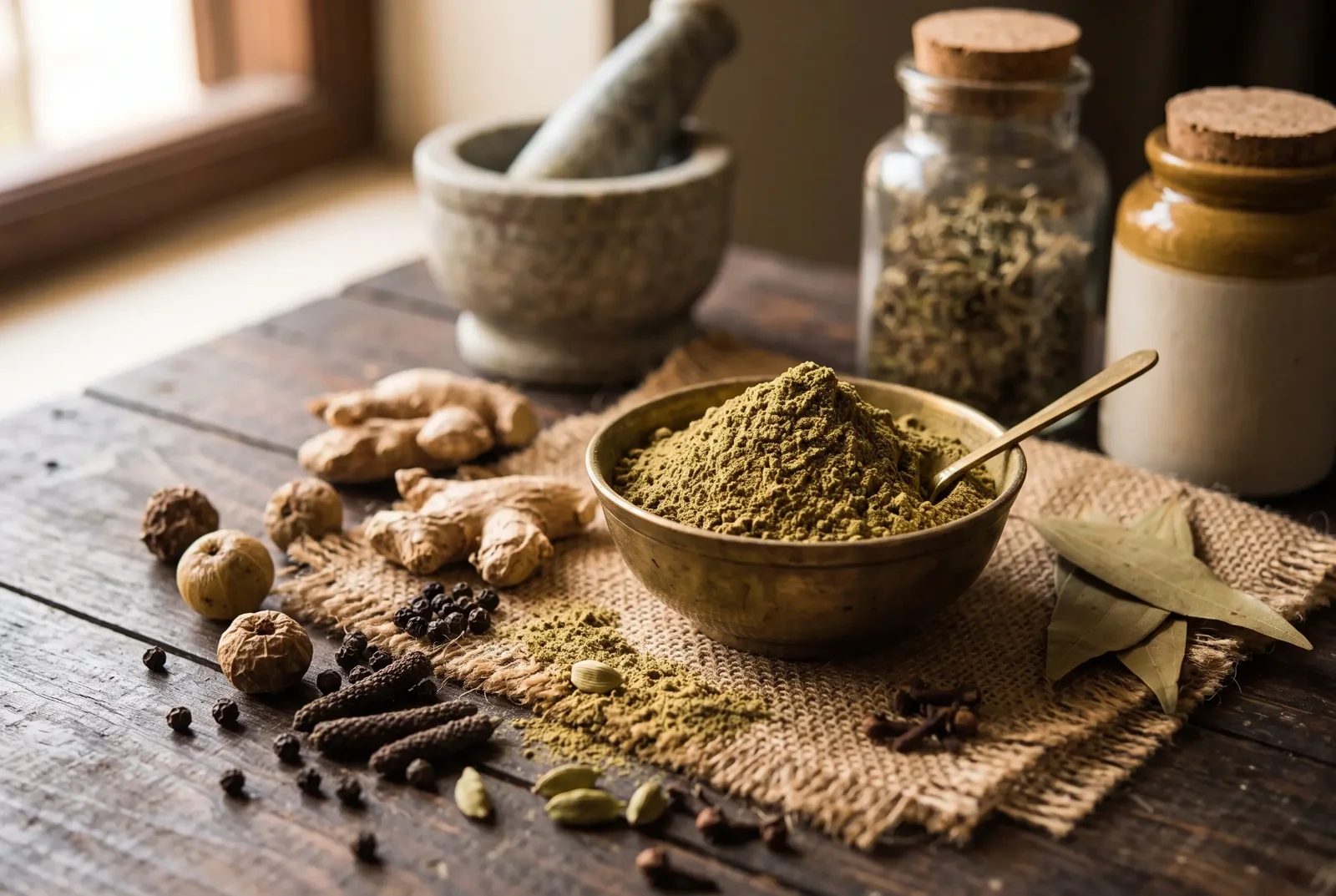
Avipattikar churna is a fine, sweet-smelling Ayurvedic powder. It has 14 ingredients, and the name can make it sound like a single herb.
It is not. Most of the jar is mishri and one root. Here is what goes into it, how it is traditionally used, and what to check before you buy.
Avipattikar churna is a classical Ayurvedic powder made from 14 ingredients. By the classical recipe, about half of it is mishri (crystallised sugar, also called sugar candy) and about a third is trivrit, a root.
The other 12 ingredients are spices, fruits, a leaf, a root and a little salt. Together they make up the remaining sixth.
It is traditionally used in Ayurveda for digestive complaints.
Avipattikar churna is a classical formula. It is described in Bhaishajya Ratnavali, a well-known Ayurvedic text.
"Churna" means powder. You will also see it spelled churnam, choornam or choorna. These are the same product name written in different ways.
The classical recipe uses 14 ingredients. Eleven of them go in at 1 part each. Clove goes in at 11 parts, trivrit at 44 parts and mishri at 66 parts. The proportions below are those listed in a study of avipattikar churna on peptic ulcers in rats.
Ingredient | Common name | Parts | Share of the powder |
|---|---|---|---|
Sharkara | Mishri (sugar candy) | 66 | About 50% |
Trivrit | Turpeth root, also called nishoth | 44 | About 33% |
Lavanga | Clove | 11 | About 8% |
Shunthi | Dried ginger | 1 | Under 1% |
Maricha | Black pepper | 1 | Under 1% |
Pippali | Long pepper | 1 | Under 1% |
Haritaki | Chebulic myrobalan | 1 | Under 1% |
Vibhitaki | Belleric myrobalan | 1 | Under 1% |
Amalaki | Amla | 1 | Under 1% |
Musta | Nut grass root | 1 | Under 1% |
Vida lavana | A type of salt | 1 | Under 1% |
Vidanga | False black pepper | 1 | Under 1% |
Ela | Cardamom | 1 | Under 1% |
Patra | Indian bay leaf | 1 | Under 1% |
Three things stand out.
Half of it is mishri. Mishri is sugar crystallised into clear, hard lumps. It is made differently from white table sugar, and it is the single largest ingredient.
Trivrit is the main herb. It makes up about a third of the powder, far more than any other plant.
The spices are a small share. Ginger, black pepper, long pepper, clove, cardamom and bay leaf are what give it its sweet, warm, peppery aroma. Apart from clove, each one is under 1% of the powder.
Manufacturers do not always follow the classical proportions exactly. The label on the jar tells you what that maker used.
Avipattikar churna is traditionally used in Ayurveda for digestive complaints.
In Ayurveda, it is grouped with formulas used to settle pitta, one of the three doshas. That is a traditional way of describing it, not a measured effect.
People often compare the two because both are classical powders that contain amla, haritaki and bibhitaki.
The difference is in the amounts. Triphala is made from those three fruits alone, in equal parts. In avipattikar churna, the same three fruits together make up only about 2% of the powder. The rest is mostly mishri and trivrit.
So avipattikar churna is not a stronger or weaker triphala. It is a different formula. You can read more in our guide to what is triphala.
Follow the directions on the label, and ask your doctor before you start. Serving directions differ from maker to maker.
Safety research on avipattikar churna is limited. These are the points worth knowing.
It is half mishri. Mishri is made differently from white table sugar, but it is still a sugar. If you have been told to limit sugar, read the label and ask your doctor first. Like chyawanprash, it is a traditional preparation sweetened on purpose. Our ultimate guide on chyawanprash covers another example.
Trivrit is its main herb. Ayurvedic texts class trivrit as a purgative, a herb used to move the bowels. Keep this in mind if you already take anything for digestion. Our guide to ayurvedic medicines for constipation explains how different Ayurvedic powders compare.
Heavy metals. The classical recipe lists only plants, mishri and salt. No metals or minerals are part of it. Still, some Ayurvedic preparations have been found to contain lead, mercury or arsenic, according to the US National Center for Complementary and Integrative Health's page on Ayurvedic medicine. Buy from a maker that names every ingredient and shares its testing.
Pregnancy, breastfeeding and children. Speak to your doctor first.
Medicines and health conditions. If you take regular medication or have a health condition, speak to your doctor before using it.
Symptoms that keep coming back. Do not use any herbal product to delay seeing a doctor about ongoing digestive trouble.
Check the ingredient list. It should name the ingredients, ideally all 14. Some makers list only the "key" herbs.
Look for mishri. Mishri near the top of the list is normal for this formula. Some makers list it as sugar or sugar candy instead, so the label tells you which one they used.
Look for the maker's directions and warnings. These tell you how that maker intends the product to be used.
Check the best-before date. Powders are best used within the date on the pack.
Patanjali sells Divya Avipattikar Churna. Dhootapapeshwar sells Avipattikar Choorna. Krishna Ayurved sells Avipattikar Churna.
Ingredients, directions and any claims come from each manufacturer. Read the label on the pack you choose.
TheDesiFood offers doorstep delivery worldwide, including the USA, UK, Middle East, Australia and Canada.